




Current Landlords
If you are a landlord currently renting or in the lease up process with a DC Housing Authority (DCHA) Voucher or Rental Assistance Program participant, this page provides information for you.
If you are a landlord currently renting or in the lease up process with a DCHA participant, visit the Landlord Portal in RentCafe to check the status of RFTA, schedule an inspection, review HAP or send a message to DCHA.
For RentCafe help, visit the Resources page.
Learn more about the Voucher & Rental Assistance Programs administered by DCHA.
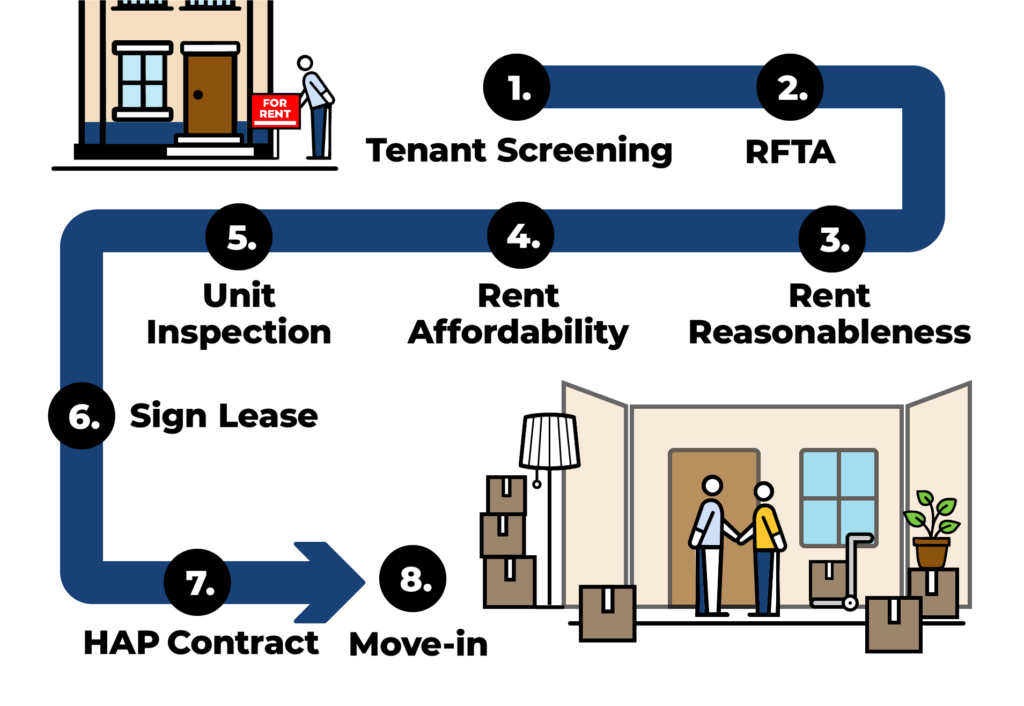
Leasing Your Unit to a Voucher Participant
Before DCHA can begin issuing a monthly rental assistance payment to a landlord, there are several steps that must be completed to ensure the landlord and unit meets program requirements.
The steps include:
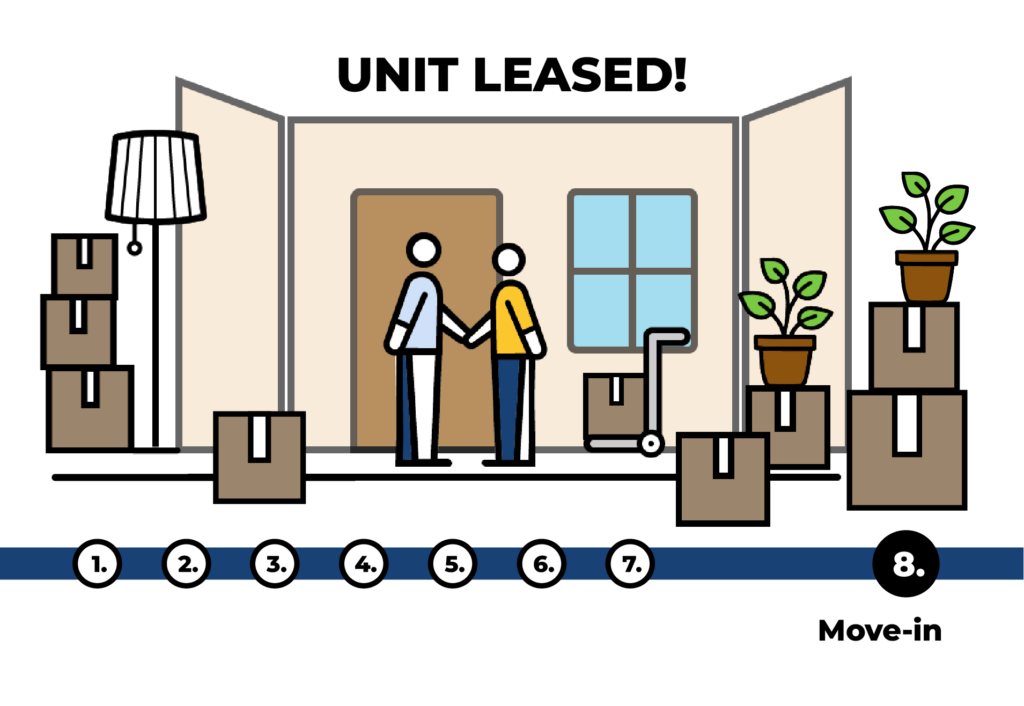
1.) Tenant Screening, 2.) Request for Tenancy Approval (RFTA), 3.) Rent Reasonableness, 4.) Rent Affordability 5.) Unit Inspection, 6.) Sign Lease, 7.) HAP Contract and 8.) Move-in.
Each step is important to make sure the home meets program requirements and the rental assistance can begin. All steps must be completed for DCHA to begin issuing its portion of the rent — or the Housing Assistance Payment (HAP) to the landlord.
Advance the slideshow to review each step.
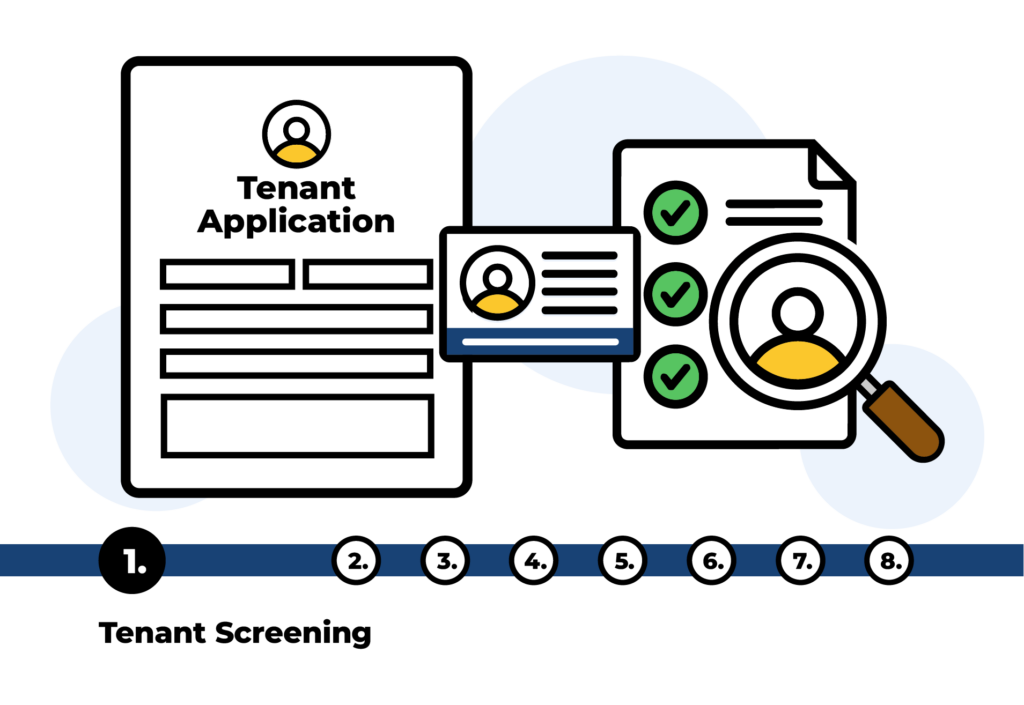
Step 1: Landlord Screens Prospective Tenants
A voucher participant who is searching for housing chooses a unit based on their needs and the program requirements. The landlord may screen the participant using their standard rental criteria, just as they would for an unassisted, prospective tenant.
Landlords must treat all prospective tenants – unassisted or assisted by DCHA – the same. Tenant selection standards should be based on objective, business-related considerations, such as rental payment history, credit reports and references. Landlords are prohibited from denying housing based on the protected traits as defined by the federal Fair Housing Act and the DC Human Rights Act.
DCHA screens individuals and families to confirm eligibility for the voucher or rental assistance program. DCHA does not screen families for tenant suitability; this is the landlord’s responsibility.
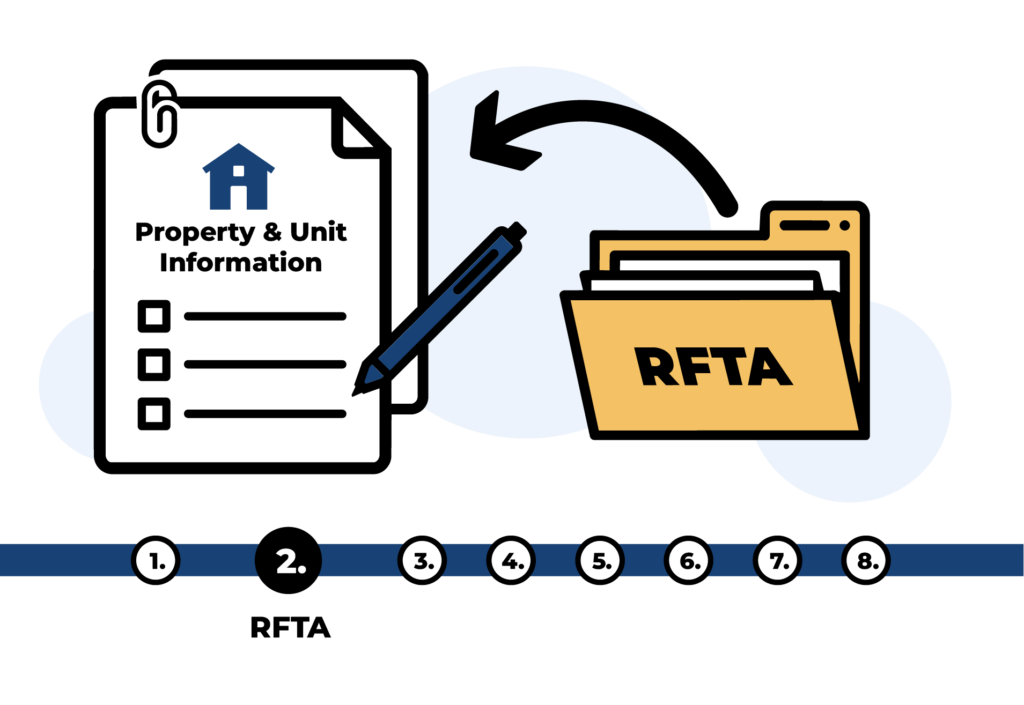
Step 2: Submit RFTA Packet
Once the participant selects a unit, the landlord and the participant complete the required Request for Tenancy Approval (RFTA) process. DCHA then reviews the proposed tenancy, including the rental rate, rent affordability, rent reasonableness, and unit inspection.
The RFTA asks for information on the desired rental unit, property, and property owner. It includes questions on amenities, utilities, appliances, and the landlord’s desired contract rent, and requires supporting documents to verify proof of ownership.
DCHA reviews the RFTA packet to determine the landlord’s and unit’s eligibility, and that the rent is reasonable and affordable.
Processing a RFTA packet may take up to 5 business days from when it is submitted to DCHA. Submitting an incomplete RFTA may cause delays in the lease up process.
DCHA recommends landlords submit the RFTA packet via the RentCafe Landlord Portal.*
*For RentCafe help, visit the Resources webpage.
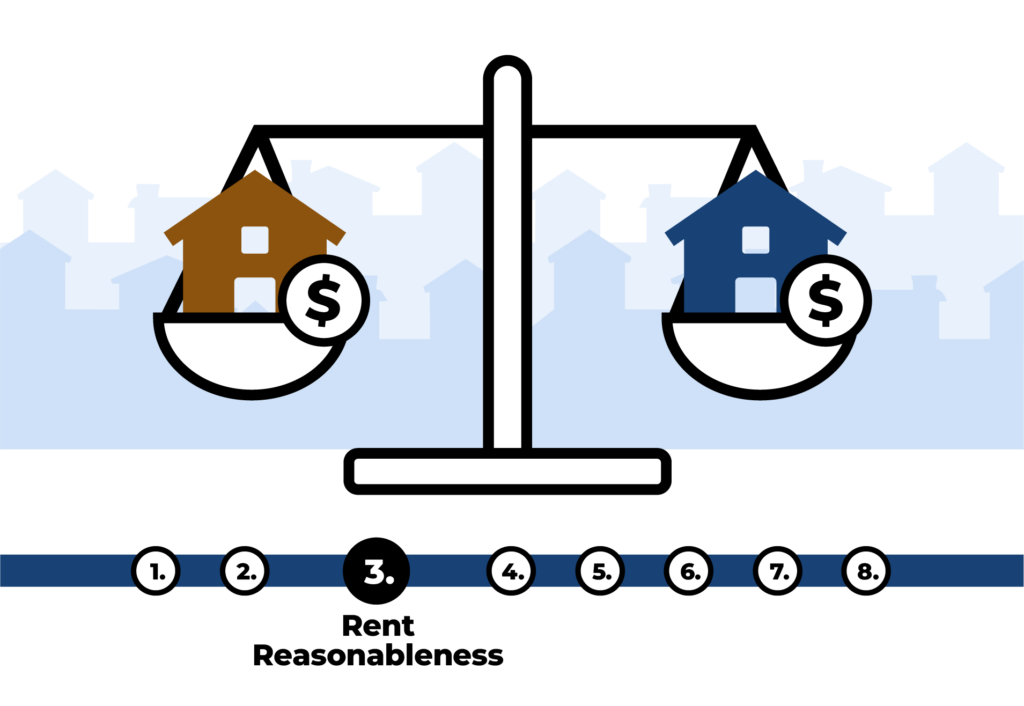
Step 3: Is Rent Reasonable?
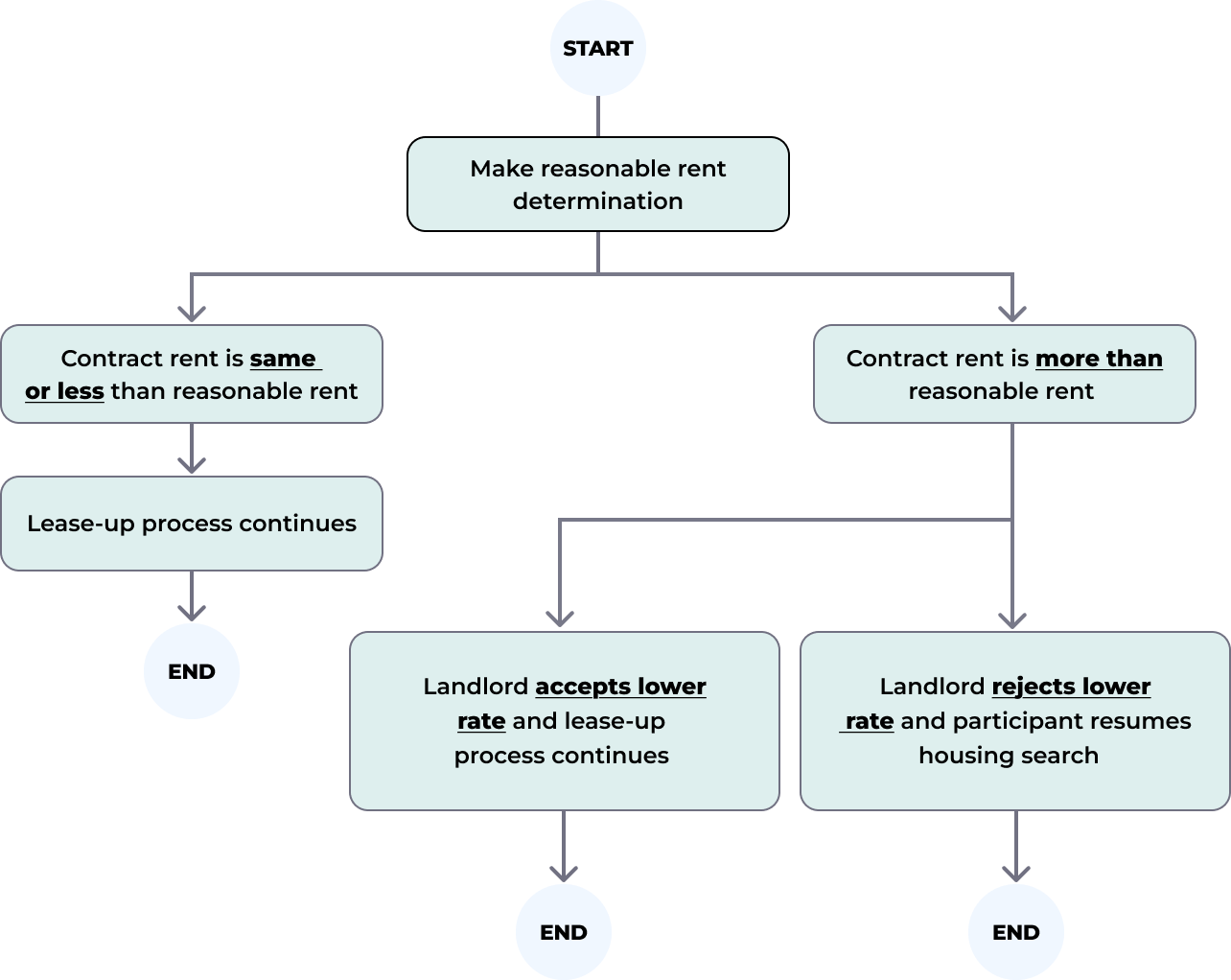
For DCHA to approve a unit, its contract rent must be reasonable and affordable.
Rent reasonableness determines if the contract rent is supported by the local rental market. The participant’s prospective unit and its rent are compared with similar unsubsidized units and their rental rates in the same or nearby market area.
The determination considers key unit characteristics (location, age, size, unit type, quality) and any amenities, services or utilities included that are provided by the landlord.
Once the contract rent is determined to be both reasonable and affordable, the unit will be scheduled for inspection.
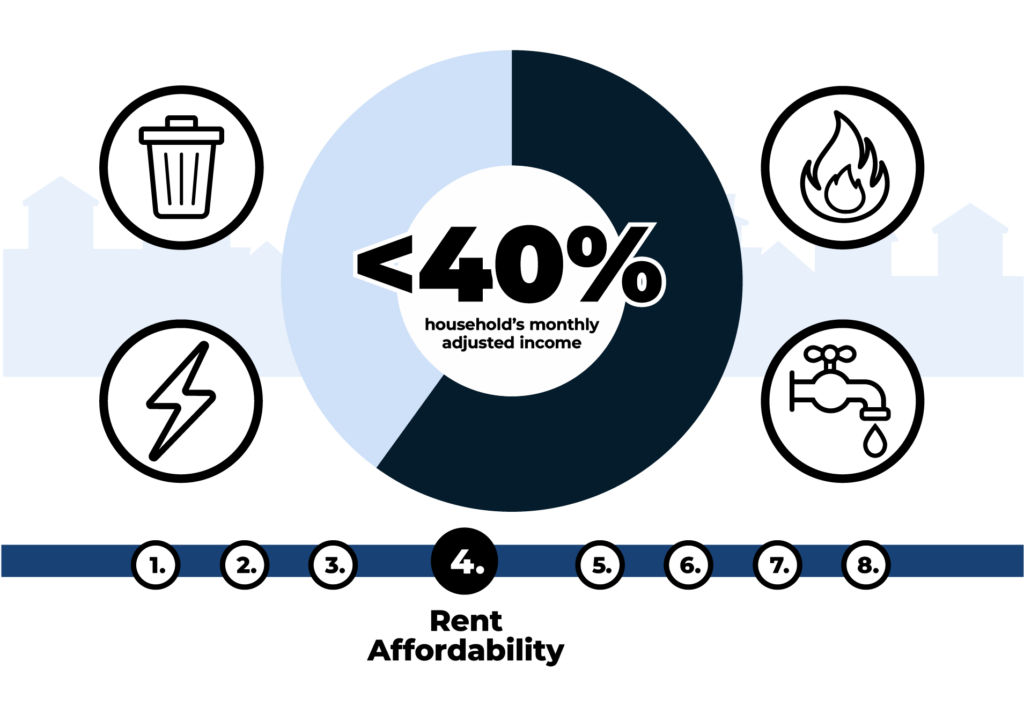
Step 4: Is Rent Affordable?
Affordability determines whether the participant can afford the total housing costs for the unit, including the participant’s portion of the rent and any applicable utility costs.
To be considered affordable, the household’s total housing costs must not exceed 40% of the household’s monthly adjusted income.
A unit’s rent may be determined to be reasonable but not affordable for the participant.
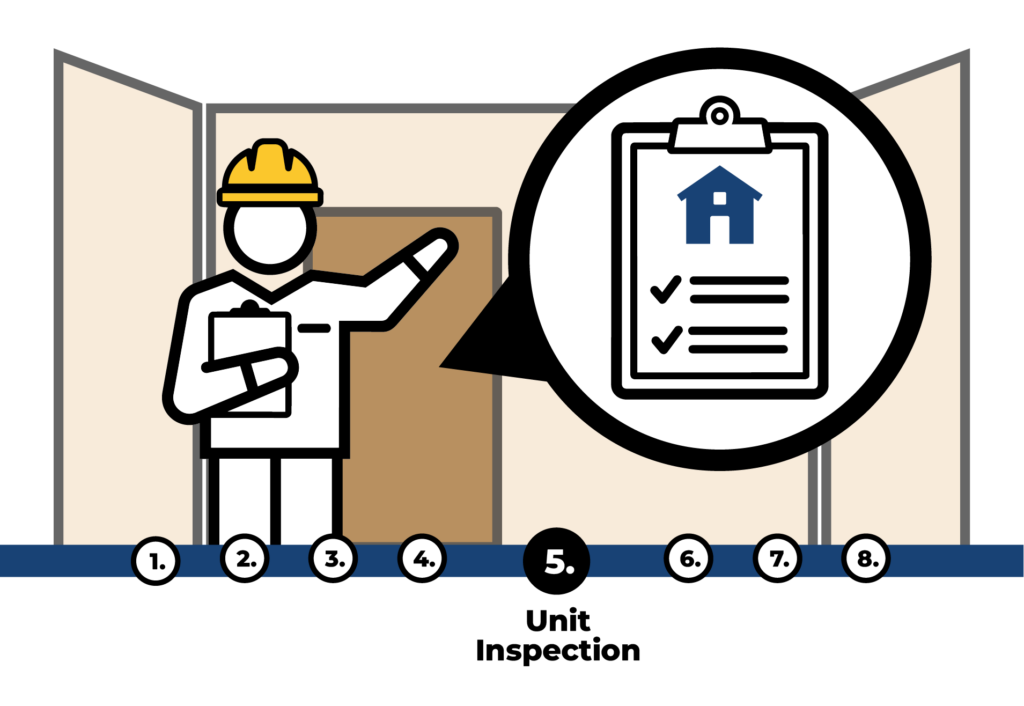
Step 5: Unit Inspection
All units subsidized by DCHA must be inspected to confirm the housing meets the US Department of Housing and Urban Development’s (HUD) standards. HUD standards ensure the unit is safe, sanitary, structurally sound, and free from health and safety hazards.
An initial inspection must be performed before a participant moves into a unit.
DCHA will schedule the initial inspection approximately 3–4 days after receiving a complete leasing packet, provided the unit has reached the available-for-inspection date listed on the Request for Tenancy Approval (RFTA). The landlord or their representative must be present for the initial inspection.
Once the unit passes the initial inspection, the participant and landlord can sign a lease agreement.
If the unit fails its initial inspection, the landlord will be required to make repairs and then DCHA will perform a second inspection. If the unit fails inspection a second time, the participant must return resume their housing search.
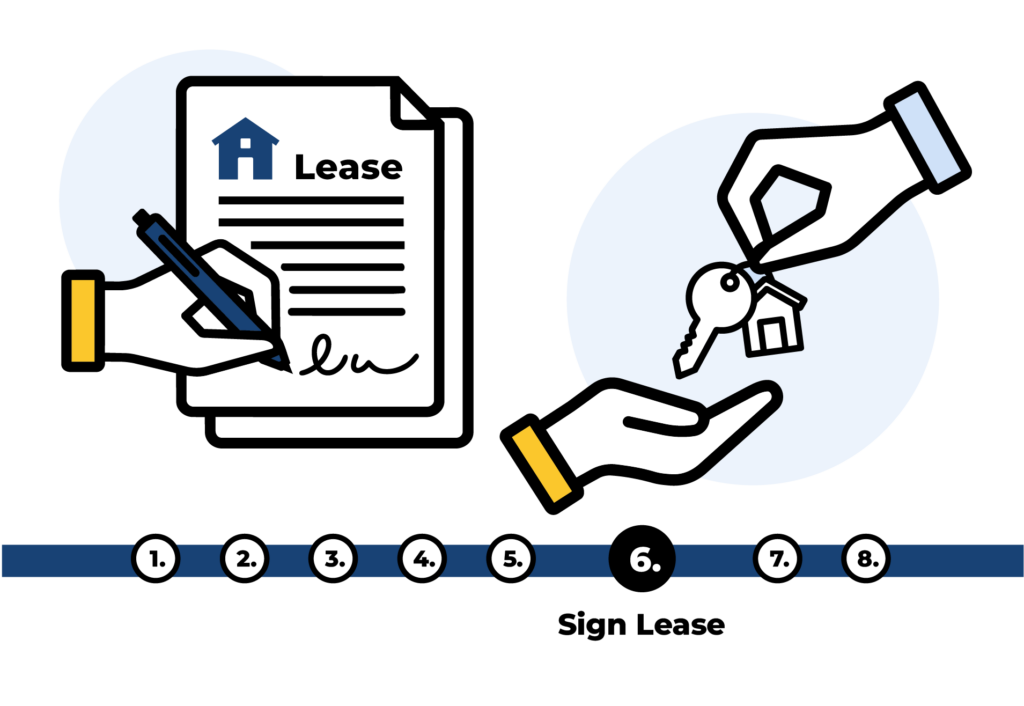
Step 6: Sign Lease with Tenant
A lease is a contract between the landlord and their tenant; DCHA is not part of the lease.
DCHA will send a Tenancy Approval Notice to the landlord and participant that says the unit has passed inspection, contract rent has been determined, and the landlord and tenant can proceed with signing a lease.
The lease must include the names of the owner and the tenant(s), the unit’s address, the lease duration including the date it begins and ends, the amount of monthly rent, and which utilities and appliances are the responsibility of the owner or the responsibility of the tenant.
The lease will also include information on the amenities and/or housing services that the landlord must provide and any utilities that are the landlord’s responsibility.
Before a tenant who receives rental assistance from a DCHA program moves into a unit, the landlord must submit a copy of the executed lease and the Tenancy Approval Notice packet to DCHA. After those documents are received and processed, DCHA will complete the Housing Assistance Payment (HAP) contract with the landlord.
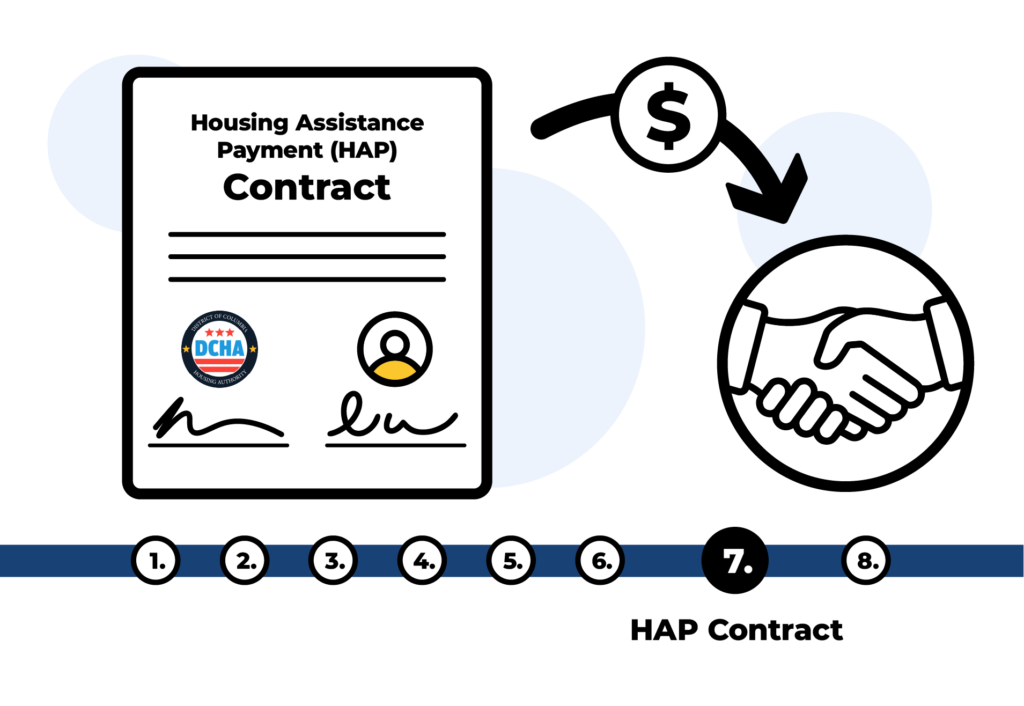
Step 7: Execute HAP Contract with DCHA
The agreement between the landlord and DCHA is called the Housing Assistance Payment (HAP) contract.
DCHA will only begin issuing its portion of the monthly rent – or HAP – directly to the landlord after the HAP contract is executed.
The HAP contract says the landlord must agree to the program requirements and includes information on the total contract rent, the amount of that rent paid by DCHA directly to the landlord (the Housing Assistance Payment or HAP), and the total amount of rent paid by the tenant (the Total Tenant Payment or TTP).
Both the HAP contract and lease must list the same contract rent, HAP portion, utility responsibility, and household members.
The HAP contract will begin on the first day of the lease term.
Step 8: Move-in
The tenant may move into the approved unit on or after the date that the lease term begins. The tenant must have keys to their home no later than the start date of their lease term.
The landlord is responsible for maintaining a decent, safe unit and property; performing timely maintenance and repairs; and collecting the tenant’s portion of the rent, in accordance with the lease and HAP contract.
DCHA’s responsibilities include disbursing DCHA’s portion of the rent (or HAP) each month; performing inspections, as required by HUD, to confirm the unit meets HUD’s standards; reviewing Recertification, which is completed by the Voucher or Rental Assistance Program participant, to confirm ongoing eligibility and if needed, recalculate the participant’s share of the rent; and ensure the participant, the unit and the landlord remain in compliance with the Voucher or Rental Assistance Program regulations.
Contract Rent
The contract rent, or the monthly cost of the subsidized unit, must not exceed the Payment Standard, be reasonable compared with other similar homes in the same or nearby area, and be affordable for participants.
Rent Payment Standards
A Payment Standard is the maximum monthly Housing Assistance Payment (HAP) for a unit based on bedroom size. It includes the unit’s rent and the applicable utility allowance. The Payment Standard is used to determine the HAP that DCHA pays directly to the landlord on behalf of the participant.
DCHA’s HAP will never be more than the Payment Standard. The actual HAP amount will vary by participant and is determined by various factors, including the participant household’s income. If the total housing costs (rent and applicable utility allowance) is more than the Payment Standard, the participant may be responsible for paying the difference, subject to applicable affordability requirements.
On October 8, 2025, the Board of Commissioners approved the Resolution for the Housing Choice Voucher Program Payment Standard Schedule for Fiscal Year (FY) 2026. The DCHA Payment Standards for Fiscal Year 2026 were approved at 187% FMR.
IMPORTANT: The Payment Standard is the value of the voucher for the applicable bedroom size. It does not guarantee the full Payment Standard will be paid by DCHA to the landlord.
All units under a HAP contract are subject to DCHA’s rent reasonableness requirements.
Rent Reasonableness
Rent reasonableness determines if the contract rent is supported by the local rental market. The participant’s prospective unit and its rent are compared with similar unsubsidized units* and their rental rates in the same or nearby market area.
The determination considers key unit and property characteristics (location, age, size, unit type, quality) and any amenities, services or utilities included that are provided by the landlord.
Those characteristics are submitted by the landlord as part of the Request for Tenancy Approval (RFTA) packet and reviewed to determine if the landlord’s contract rent is reasonable.
The rent reasonableness review is supported by AffordableHousing.com. It provides technology, open market comparable data and market data tools.
*Rent-stabilized, voucher occupied, tax credit and other subsidized units are excluded from any comparison.
Affordability
DCHA must ensure that a reasonable rent is also affordable for the Voucher & Rental Assistance Program participant.
The Total Tenant Payment (TTP) is the amount the participant is expected to pay monthly for their household expenses (rent, utilities and any fees for use of property amenities).
According to HUD, the TTP is expected to be 30% of the household’s monthly adjusted income and it cannot exceed 40% of the household’s monthly adjusted income.
Utility Allowance Schedule
The Utility Allowance is an estimate of monthly utility costs that a participant is responsible for paying. DCHA uses the applicable Utility Allowance when calculating the participant’s total housing costs (rent and utilities), and determining the participant’s rent responsibility and the Housing Assistance Payment (HAP) paid by DCHA directly to the landlord.
The Utility Allowance is an estimate. It is not the participant’s actual utility bill or a payment made directly to the participant.
DCHA’s Utility Allowance is based on third-party cost study of utility costs throughout the District of Columbia.
Support for Housing Search
Support for Housing Search
Housing Search Assistance
DCHA provides housing search assistance to help participants find a unit that meets program requirements and their needs.
Meet & Lease events: Participants connect with landlords who have available units. Be sure your contact information is up to date in RentCafe to receive event information and invitations.
Housing Locators: The HCVP Housing Locators are available to assist participants who are elderly or have a disability. They may also assist participants who have not been able to secure a unit within 60 days of receiving their voucher. Housing Locators can help provide guidance and resources to help with your housing search. To contact a Housing Locator, email [email protected].
Security Deposit Assistance*
*Subject to available funding. For participants in both federal and local programs.
DCHA administers Security Deposit Assistance programs for eligible voucher participants. The maximum Security Deposit Assistance payment is equivalent to one month’s contract rent. Voucher participants must meet certain eligibility criteria to receive this assistance.
DCHA will only begin processing Security Deposit Assistance applications after notifying the voucher participant and prospective landlord that the unit has been approved for tenancy.
To apply for Security Deposit Assistance, a voucher participant must:
- Request the Security Deposit Assistance Form from their DCHA Housing Specialist**
- Return the completed form to their DCHA Housing Specialist**
**To find their Housing Specialist’s contact info, voucher participants may contact the DCHA Call Center at 202-535-1000 or visit RentCafe. For RentCafe help, visit the Resources webpage.
To be eligible, a participant must be one of the following:
- New participant who has not yet signed a lease
- Transferring to a new unit and has not moved within the past three years (36 months)
- Transferring to a new unit based on approved reasonable accommodations
- Emergency Transferring to a new unit based on Housing Quality Standards (HQS) failures caused by the landlord at their current unit
- Participant with VAWA protection
Landlord must be:
- Renting to voucher participant
- In compliance on all existing Housing Assistance Payment (HAP) contracts with DCHA
The lease must be executed and the Housing Assistance Payment (HAP) contract signed before DCHA sends the Security Deposit Assistance payment.
DCHA sends the Security Deposit Assistance payment directly to the landlord or the landlord’s designated management entity. The Security Deposit Assistance payment and the first HAP are sent at the same time.
The landlord must maintain the deposit in accordance with all security deposit laws and return the balance of the security deposit to DCHA subject to any lawful deductions.
Reasonable Accommodations
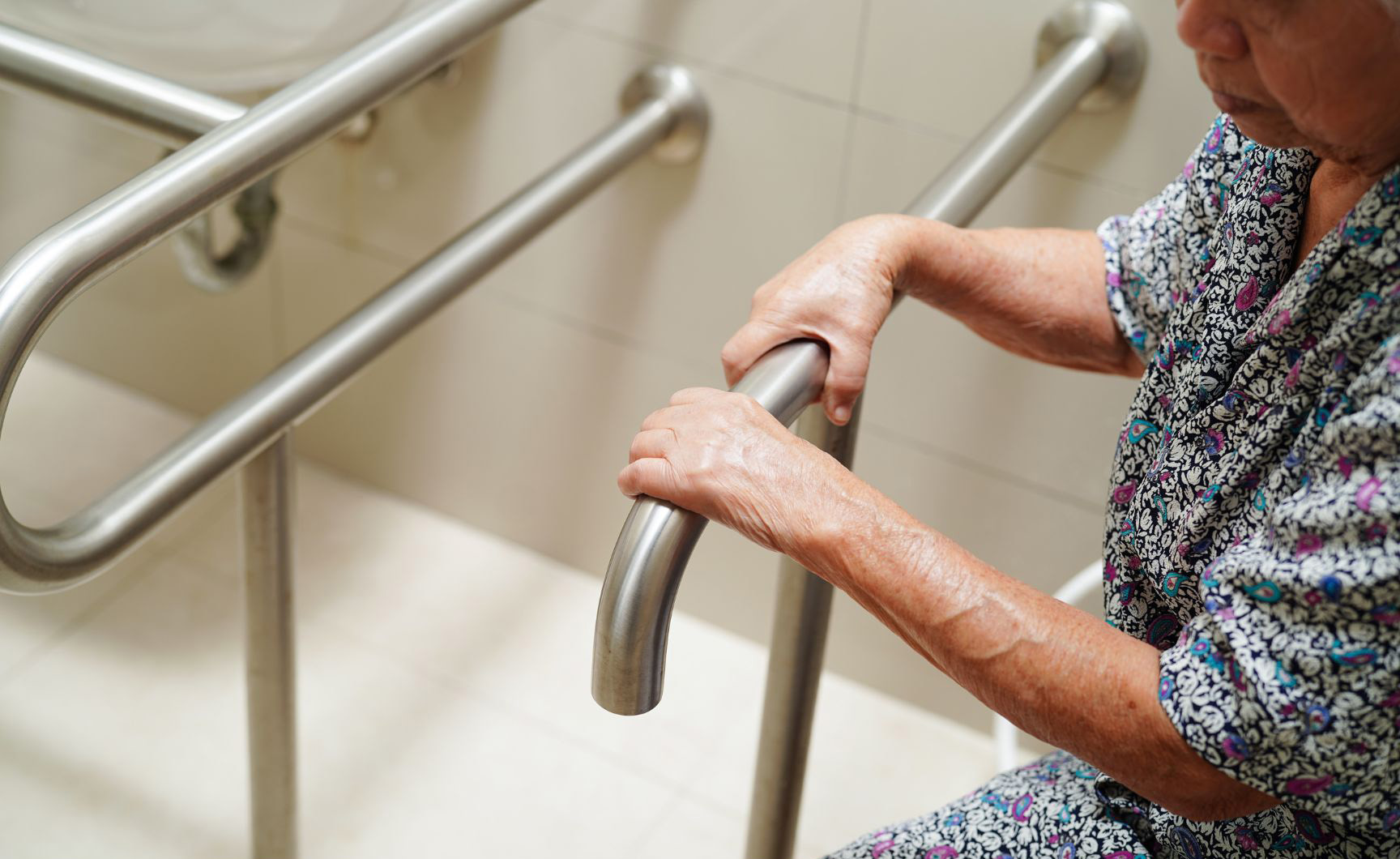
The Fair Housing Act requires a landlord to provide reasonable accommodations to persons with a disability. Reasonable accommodations are adjustments made to a rule, policy, practice or service that allows a person with a disability to have equal access.
DCHA assess reasonable accommodation requests on a case-by-case basis.
Landlords:
- Must allow the tenant to make reasonable modifications to the unit
- Are not required to pay for the modification
- May require the unit be restored to its original state at the tenant’s expense when they move. If the modifications do not affect the landlord or future tenant’s use and enjoyment of the premises, the landlord cannot require restoration.
Inspections
All units that are subsidized by DCHA voucher and rental assistance programs must be inspected to confirm the housing meets the US Department of Housing and Urban Development’s (HUD) quality standards.
There are several types of inspections:
Initial Inspection:
Before a participant moves into a unit, DCHA must conduct an initial inspection to confirm it meets HUD quality standards and is approved for move in.
Biennial Inspection:
DCHA is a Moving to Work (MTW) agency with authorization to conduct biennial inspections. HUD requires DCHA to inspect every subsidized unit at least once every other year (biennially) to confirm the unit continues to meet HUD quality standards. This inspection may be conducted with recertification or separately.
If the unit does not pass the biennial inspection and a second inspection, it may enter abatement, which means HAP will not be disbursed. If the landlord does not request and pass a third inspection, the HAP contract may be terminated.
Quality Control Inspection:
HUD requires inspections of a sample of units to evaluate inspector work and ensure inspections are performed in compliance with HUD quality standards.
Special Inspection:
A special inspection, also referred to as a complaint inspection, may be requested when there are concerns about the quality or condition of the unit. A special inspection may be requested by the participant, landlord, a third party or DCHA, when:
- There are concerns the unit does not meet HUD’s quality standards or other program inspection requirements
- A participant has reported a maintenance issue to the landlord and the landlord has not completed the required repairs in a reasonable timeframe. Important: Participants should first report maintenance issues to their landlord and allow a reasonable opportunity for the landlord to address the issue.
To request a special inspection
- Participants and landlords: Contact your dedicated Housing Program Specialist or Housing Program Coordinator, or contact the Inspection Department at [email protected].
- Third-parties: Contact the DCHA Call Center at 202-535-1000.
Inspections Hotline & Email
Contact the HCVP Inspections Hotline for questions regarding inspection results or to confirm or reschedule an inspection.
Phone: 771-208-3357
Email: [email protected]
Hours: Monday – Friday, 9am-4pm
Please clearly state your name, the best phone number to contact you, and the reason you are calling. DCHA will respond to your call within 48 hours of receiving the voicemail message.