
Current Voucher Participants & Your Voucher
If you are a currently receiving Voucher or Rental Assistance from the DC Housing Authority (DCHA), this page provides information to help you understand and manage your voucher.
Leasing a Unit with Your Voucher or Rental Assistance
If you have been issued a voucher or rental assistance, you may need to find a home that meets program requirements. The steps you take depend on whether your assistance is tied to you and your household or tied to a specific property or unit.
Applies to:
When the assistance is tied to the eligible household, the housing search is led by that household. To search for housing, consider:
- Using the internet Websites like affordablehousing.com, apartmentguide.com, or forrent.com are great resources;
- Check local newspaper ads;
- Talk to a real estate agent;
- Ask around. Sometimes word-of-mouth from friends, family, or co-workers can point you in the right direction;
- Drive through neighborhoods looking for “For Rent” signs.
Applies to:
When the assistance is tied to the unit, eligible participants are provided a list of specific rental communities to contact regarding available homes.
For a list of properties with units subsidized by project-based or sponsor-based vouchers, visit the Properties webpage.
The Lease Up Process
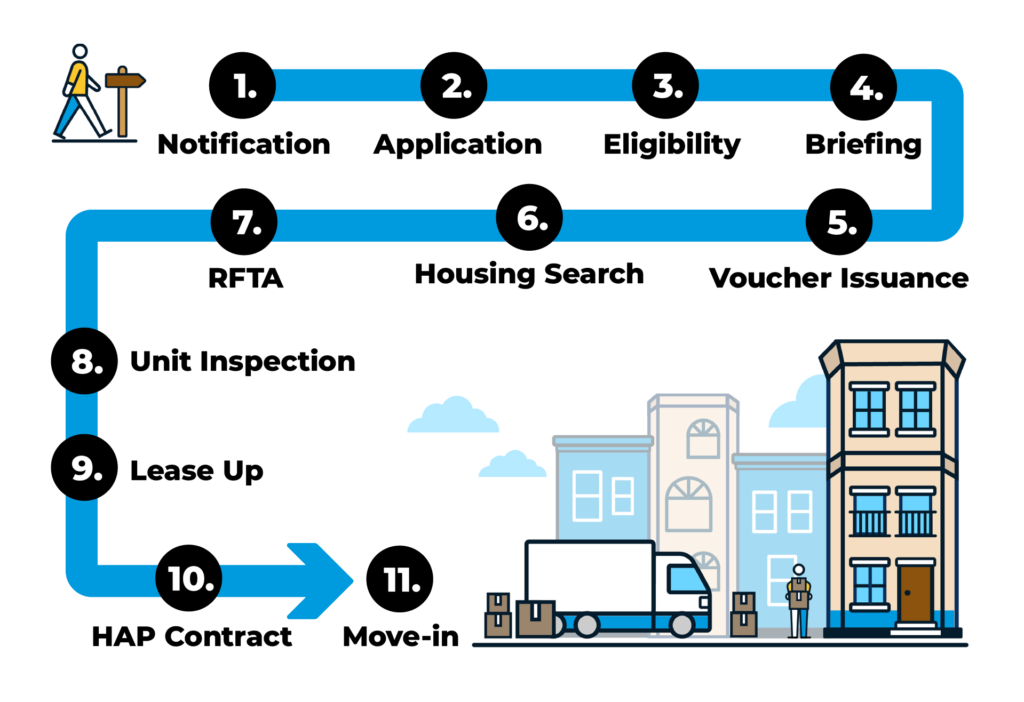
Before voucher participants move into their new home and before DCHA can begin issuing rental assistance payments to the landlord, there are several steps that must be completed by the participant, the prospective landlord and DCHA.
The steps include:
1.) Notification, 2.) Application, 3.) Eligibility Determination, 4.) Briefing, 5.) Voucher Issuance, 6.) Housing Search, 7.) Request for Tenancy Approval (RFTA), 8.) Unit Inspection, 9.) Lease-Up, 10.) HAP Contract and 11.) Move-In.
Each step is important to make sure the home meets program requirements and the rental assistance can begin. All steps must be completed for DCHA to begin issuing its portion of the rent — or the Housing Assistance Payment (HAP) to the landlord.
Advance the slideshow to review each step.
Step 1: Notification
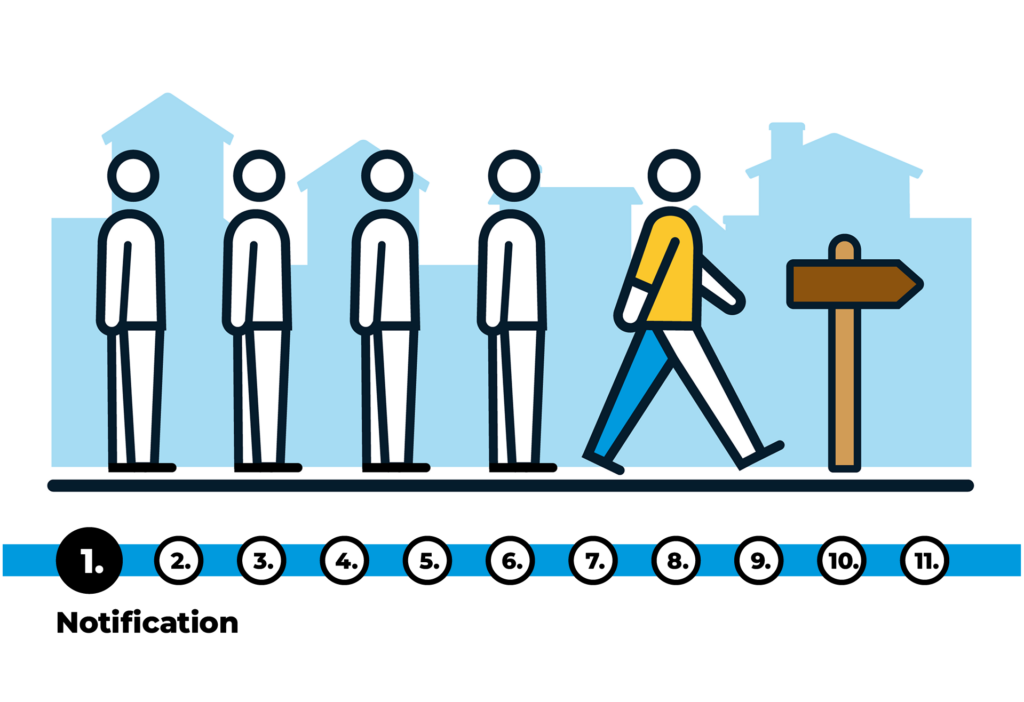
Applicants for DCHA’s voucher and/or rental assistance programs are identified through waitlists and/or by referrals, depending on the program type. For voucher programs, households are pulled from the waitlist and sent a notification* from DCHA. For programs that are dedicated to specific populations, households are selected by referral and sent a notification by the referral agency.
The notification will list the specific voucher type or rental assistance program and review a timeline and next steps. One of those next steps will be to submit a complete application and any required supporting documents to DCHA to confirm program eligibility.
To get information about your waitlist status, contact the DCHA Call Center at 202-535-1000.
*Any households on the HCVP waitlist are responsible for updating DCHA when their contact information changes.
Step 2: Application
After receiving the notification that they have been pulled from a waitlist or referred to a voucher or rental assistance program, the applicant submits an application, including any required supporting documents, to DCHA. The application must be submitted by the deadline listed in the notification.
The number and type of required supporting documents will vary based on the program. DCHA recommends applications are submitted via the online RentCafe* Resident Portal.
Completed applications with all required supporting documents are necessary for DCHA to confirm eligibility. Processing delays may occur when incomplete applications are submitted.
*For RentCafe help, visit the Resources webpage.
Step 3: Eligibility Determination
DCHA reviews the completed application and supporting documents to determine if the household is eligible.
Processing applications may take up to 30 days from when it is submitted to DCHA. Submitting incomplete applications may cause delays in determining eligibility. If any required fields are incomplete or documents missing, DCHA will notify the applicant.
If found eligible, the applicant is notified by mail and email* and invited to attend a briefing at a specific date and time. If found ineligible, the applicant is notified by mail and email* and provided information on appeals.
*Notifications sent to the street address & email account listed in application. Applicants are responsible for updating DCHA when their contact information changes.
Step 4: Briefing
Once eligible, applicants must complete a mandatory Briefing to become a participant and receive their voucher or rental assistance. Vouchers are issued only after the briefing has been completed.
The briefing is held virtually or by request, in person. It is approximately 80 minutes and reviews:
- Rules that program participants must follow;
- How to be a good neighbor;
- How to calculate your rent;
- How to move from one unit to another;
- How to stay in good standing in the program;
- And more.
The briefing aims to help participants understand the program, their role and responsibilities, the landlord’s role and responsibilities, and DCHA’s role and responsibilities.
Once the briefing is completed, participants will sign and be issued their voucher.
Step 5: Voucher Issuance
DCHA recommends applicants sign their vouchers electronically via the online RentCafe Resident Portal.
The voucher says the number of bedrooms that the participant’s subsidized unit may have. When the voucher is issued, DCHA will also provide affordability and payment standard information.*
The number of bedrooms (or bedroom size), affordability and payment standard information is customized to the participant based on their household’s income and composition, and program type.
*Bedroom size, affordability and payment standard information is also available in each participant’s RentCafe Resident Portal. For RentCafe help, visit the Resources webpage.
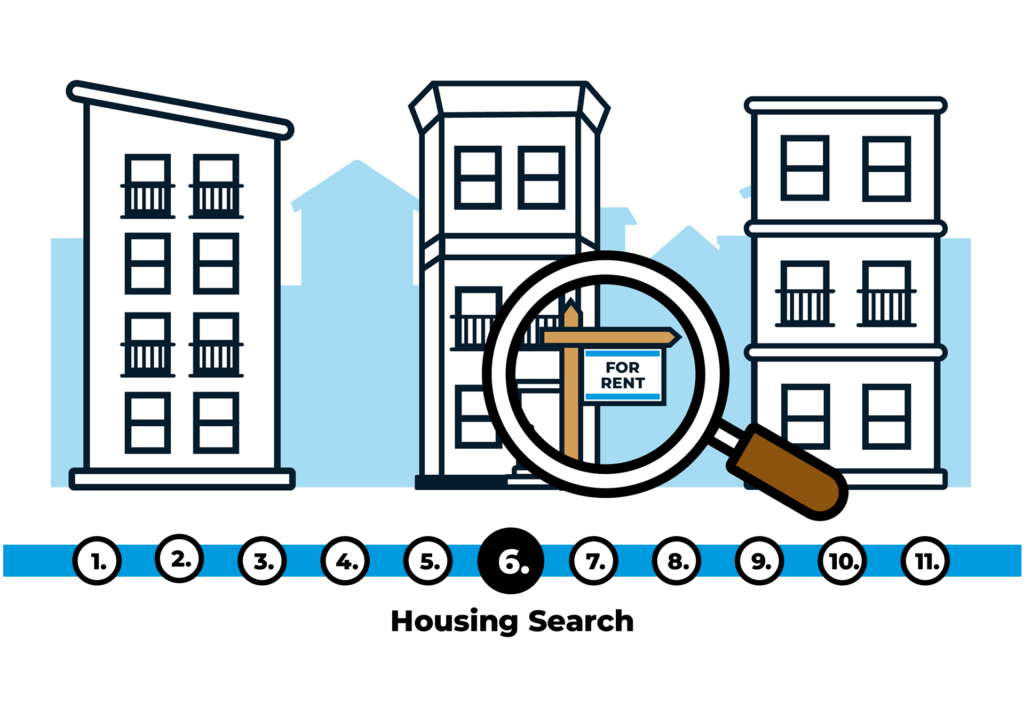
Step 6: Housing Search
The voucher is valid for 180 days from the date that it was issued. During that 180-day period, the participant identifies a unit where they’d like to live and the landlord submits a Request for Tenancy Approval (RFTA) packet.
Participants must keep in mind their specific bedroom size, affordability and payment standard information* when deciding where to live. They should also consider the neighborhood, the unit and its amenities, and their own unique situation.
To search for housing, try checking rental websites or local newspaper ads; talking to a real estate agent; looking for “For Rent” signs in your desired neighborhood; or asking friends, family or coworkers.
*Bedroom size, affordability and payment standard information is also available in each participant’s RentCafe Resident Portal. For RentCafe help, visit the Resources webpage.
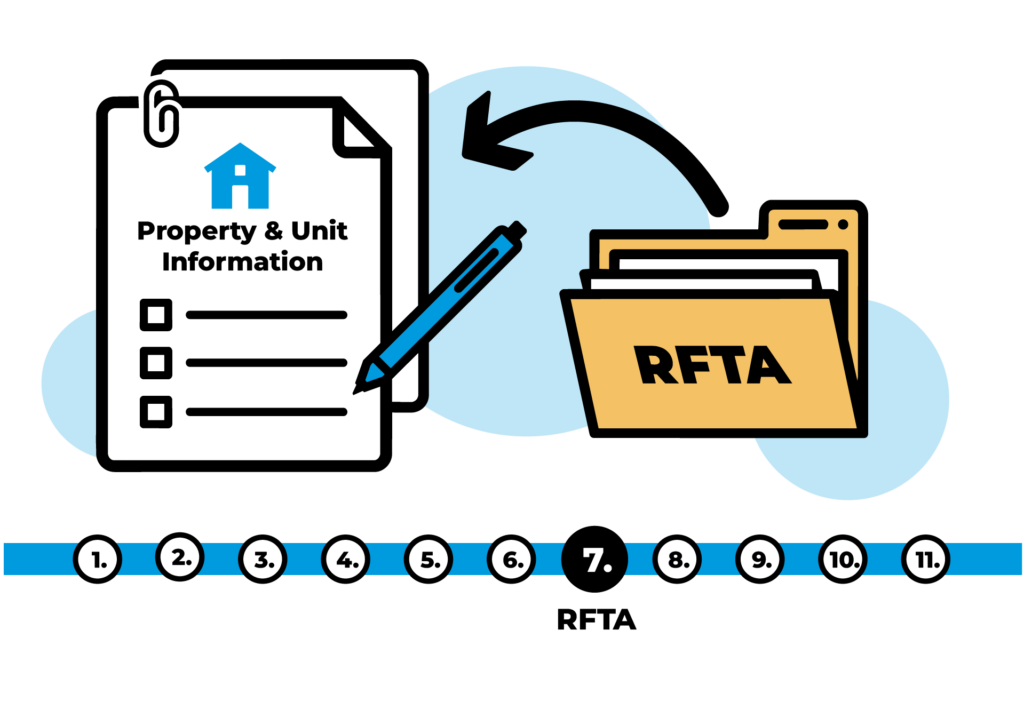
Step 7: Request for Tenancy Approval (RFTA) Packet
Once a participant identifies a unit where they’d like to live, they invite the landlord to submit a Request for Tenancy Approval (RFTA) packet to DCHA.
The RFTA asks for information on the desired rental unit, property, and property owner. It includes questions on amenities, utilities, appliances, and the landlord’s desired contract rent, and requires supporting documents to verify proof of ownership. DCHA reviews the RFTA packet to determine the landlord’s and unit’s eligibility, and that the rent is reasonable and affordable.
Processing a RFTA packet may take up to 5 business days from when it is submitted to DCHA. Submitting an incomplete RFTA may cause delays in the lease up process.
DCHA recommends participants invite landlords to submit the RFTA packet via the RentCafe Resident Portal.*
*For RentCafe help, visit the Resources webpage.
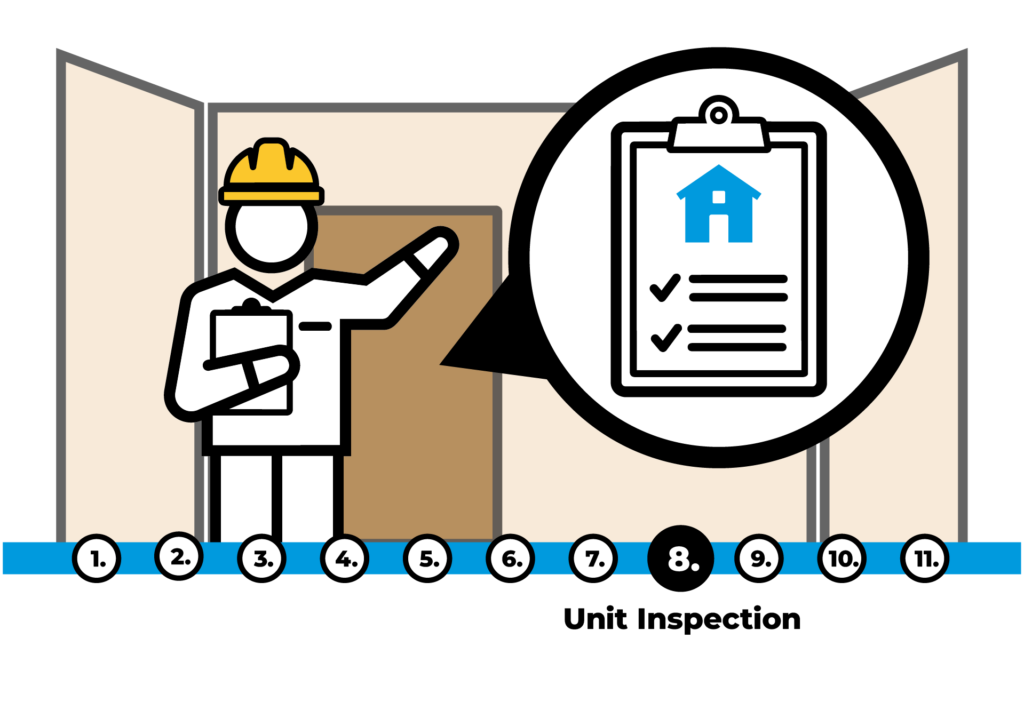
Step 8: Unit Inspection
All units subsidized by DCHA must be inspected to confirm the housing meets the US Department of Housing and Urban Development’s (HUD) standards. HUD standards ensure the unit is safe, sanitary, structurally sound, and free from health and safety hazards. An initial inspection must be performed before a participant moves into a unit.
DCHA will schedule the initial inspection to occur within approximately 3-4 business days from submission of a completed RFTA packet. The landlord or their representative must be present for the inspection.
Once the unit passes inspection, the participant and landlord can sign a lease agreement.
If the unit fails its initial inspection, the landlord will be required to make repairs and then DCHA will perform a second inspection. If the unit fails inspection a second time, the participant must return to Step 6 and resume their housing search.
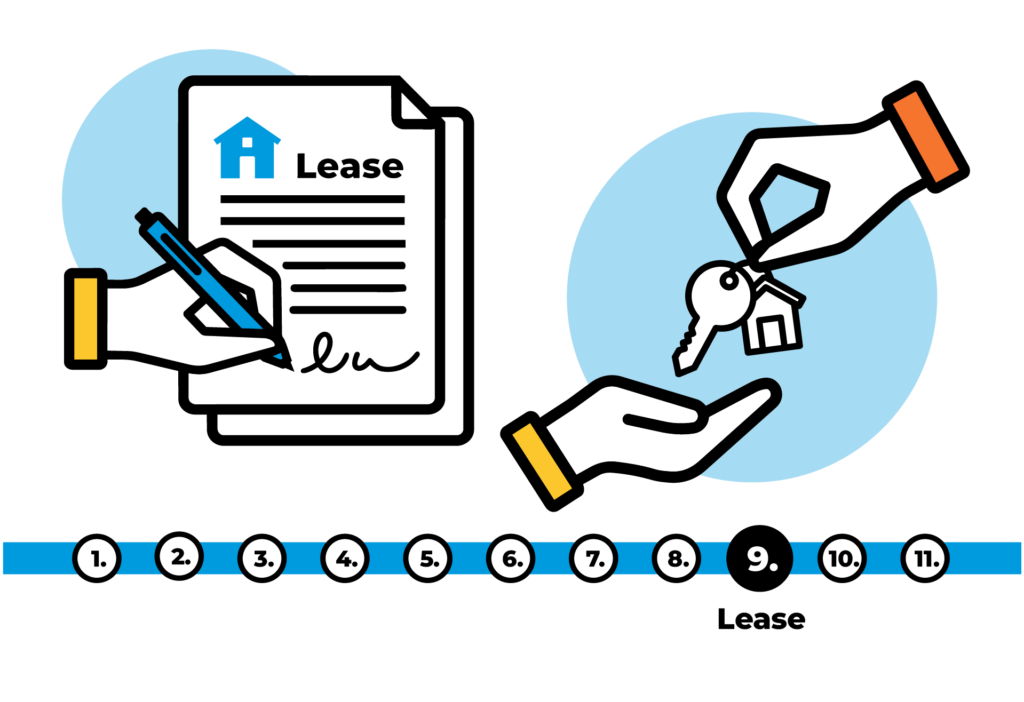
Step 9: Lease Agreement
Once the unit passes inspection, DCHA sends the landlord the Tenancy Approval notice with details of the contract rent, Housing Assistance Payment (HAP) amount, and dates of the lease term. The participant and landlord can then sign a lease agreement. A lease agreement is a contract between the landlord and their tenant.
Participants should carefully review the lease before they sign it. The lease must include the names of the owner and the tenant(s), the unit’s address, the lease duration including the date it begins and ends, the amount of monthly rent, and which utilities and appliances are the responsibility of the owner or the responsibility of the tenant.
The lease will also include the terms that the participant needs to follow while living in the unit, including the date that rent is due and any rules regarding pet ownership, guests and maintenance responsibilities.
Step 10: HAP Contract
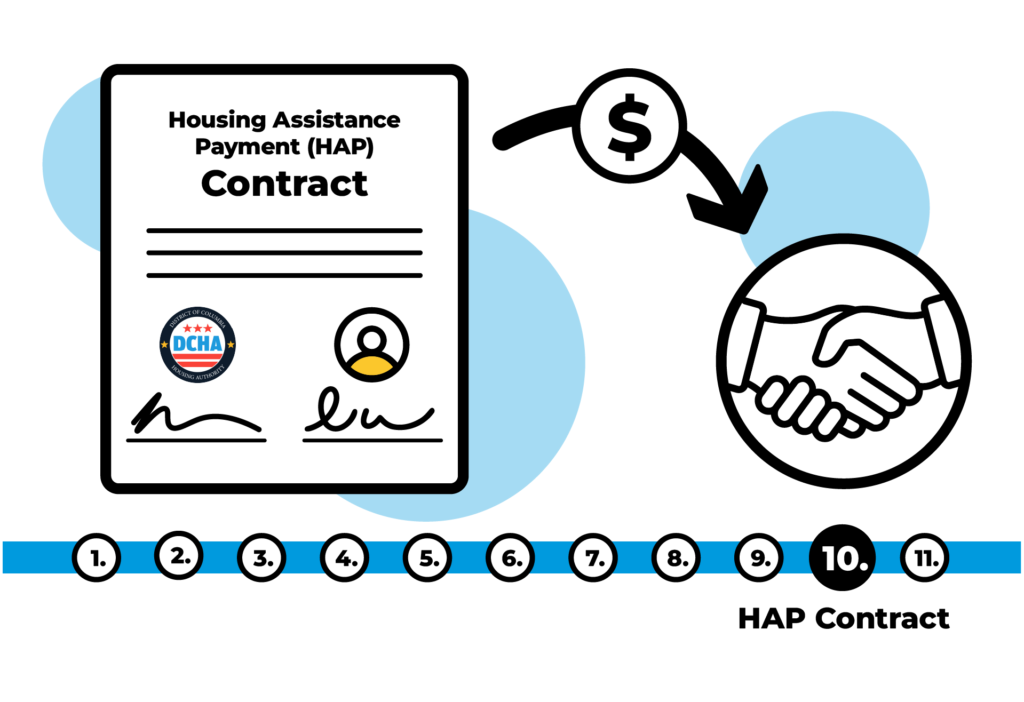
Before the participant moves in, the landlord must submit a copy of the executed lease with the move-in date to DCHA. The keys to the unit must also be provided to the participant on or before the effective lease date.
After those documents are received and processed, DCHA will complete the Housing Assistance Payment (HAP) contract with the landlord.
The HAP contract will begin on the first day of the lease term. DCHA will only begin issuing its portion of the monthly rent – or HAP – directly to the landlord after the HAP contract is executed.
Step 11: Move-in
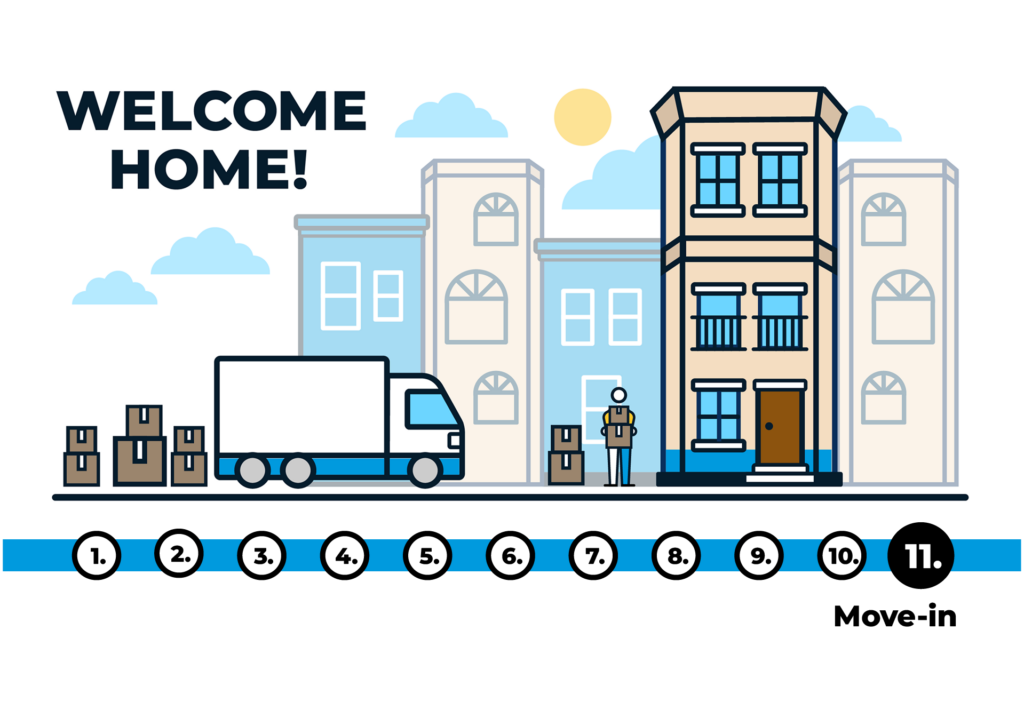
After the HAP contract is executed, the participant may move into the approved unit on or after the date that the lease term begins.
If the participant moves into the unit ahead of that date, the landlord may hold them responsible for the rent for that period.
If the participant is interested in moving after their initial 12-month lease term ends, they will need to request to transfer or port their voucher. If that request is approved, the participant will need to return to Step 6.
Housing Costs: Rent & Utilities
The contract rent, or the total monthly rent of the assisted unit, must meet program requirements. That includes being affordable for the program participant and being reasonable compared to other similar units in the local market. Participants may also be responsible for utility costs that are not included in the rent.
Affordability
Affordability considers all housing costs that are the responsibility of the program participant, including:
- Contract rent
- Any applicable utility costs
Rent Payment Standards
A Payment Standard is the maximum monthly Housing Assistance Payment (HAP) for a unit based on bedroom size. It includes the unit’s rent and the applicable utility allowance. The Payment Standard is used to determine the HAP that DCHA pays directly to the landlord on behalf of the participant.
DCHA’s HAP will never be more than the Payment Standard. The actual HAP amount will vary by participant and is determined by various factors, including the participant household’s income. If the total housing costs (rent and applicable utility allowance) is more than the Payment Standard, the participant may be responsible for paying the difference, subject to applicable affordability requirements.
On October 8, 2025, the Board of Commissioners approved the Resolution for the Housing Choice Voucher Program Payment Standard Schedule for Fiscal Year (FY) 2026. The DCHA Payment Standards for Fiscal Year 2026 were approved at 187% FMR.
IMPORTANT: The Payment Standard is the value of the voucher for the applicable bedroom size. It does not guarantee the full Payment Standard will be paid by DCHA to the landlord.
All units under a HAP contract are subject to DCHA’s rent reasonableness requirements.
Utility Allowance Schedule
The Utility Allowance is an estimate of monthly utility costs that a participant is responsible for paying. DCHA uses the applicable Utility Allowance when calculating the participant’s total housing costs (rent and utilities), and determining the participant’s rent responsibility and the Housing Assistance Payment (HAP) paid by DCHA directly to the landlord.
The Utility Allowance is an estimate. It is not the participant’s actual utility bill or a payment made directly to the participant.
DCHA’s Utility Allowance is based on third-party cost study of utility costs throughout the District of Columbia.
Support for Housing Search
Support for Housing Search
Housing Search Assistance
DCHA provides housing search assistance to help participants find a unit that meets program requirements and their needs.
Meet & Lease events: Participants connect with landlords who have available units. Be sure your contact information is up to date in RentCafe to receive event information and invitations.
Housing Navigators: The HCVP Housing Navigators are available to assist participants who are elderly or have a disability. They may also assist participants who have not been able to secure a unit within 60 days of receiving their voucher. Housing Navigator can help provide guidance and resources to help with your housing search. To contact a Housing Navigator, email [email protected].
Security Deposit Assistance*
*Subject to available funding. For participants in both federal and local programs.
DCHA administers Security Deposit Assistance programs for eligible voucher participants. The maximum Security Deposit Assistance payment is equivalent to one month’s contract rent. Voucher participants must meet certain eligibility criteria to receive this assistance.
DCHA will only begin processing Security Deposit Assistance applications after notifying the voucher participant and prospective landlord that the unit has been approved for tenancy.
To apply for Security Deposit Assistance, a voucher participant must:
- Request the Security Deposit Assistance Form from their DCHA Housing Specialist**
- Return the completed form to their DCHA Housing Specialist**
**To find their Housing Specialist’s contact info, voucher participants may contact the DCHA Call Center at 202-535-1000 or visit RentCafe. For RentCafe help, visit the Resources webpage.
To be eligible, a participant must be one of the following:
- New participant who has not yet signed a lease
- Transferring to a new unit and has not moved within the past three years (36 months)
- Transferring to a new unit based on approved reasonable accommodations
- Emergency Transferring to a new unit based on Housing Quality Standards (HQS) failures caused by the landlord at their current unit
- Participant with VAWA protection
The lease must be executed and the Housing Assistance Payment (HAP) Contract signed before DCHA sends the Security Deposit Assistance payment.
DCHA sends the Security Deposit Assistance payment directly to the landlord or the landlord’s designated management entity. The Security Deposit Assistance payment and the first HAP are sent at the same time.
The landlord must maintain the deposit in accordance with all security deposit laws and return the balance of the security deposit to DCHA subject to any lawful deductions.
Inspections
All units that are subsidized by DCHA voucher and rental assistance programs must be inspected to confirm the housing meets the US Department of Housing and Urban Development’s (HUD) quality standards.
There are several types of inspections:
Initial Inspection
Before a participant moves into a unit, DCHA conducts initial inspections to confirm it meets HUD quality standards and is approved for move in.
Biennial Inspection
DCHA is a Moving to Work (MTW) agency with authorization to conduct biennial inspections. HUD requires DCHA to inspect every subsidized unit at least once every other year (biennially) to confirm the unit continues to meet HUD quality standards. This inspection may be conducted with recertification or separately.
Quality Control Inspection
HUD requires inspections of a sample of units to evaluate inspector work and ensure inspections are performed in compliance with HUD quality standards.
Special Inspection
A special inspection, also referred to as a complaint inspection, may be requested when there are concerns about the quality or condition of the unit. A special inspection may be requested by the participant, landlord, a third party or DCHA, when:
- There are concerns the unit does not meet HUD’s quality standards or other program inspection requirements
- A participant has reported a maintenance issue to the landlord and the landlord has not completed the required repairs in a reasonable timeframe. Important: Participants should first report maintenance issues to their landlord and allow a reasonable opportunity for the landlord to address the issue.
To request a special inspection
- Participants and landlords: Contact your dedicated Housing Program Specialist or Housing Program Coordinator, or contact the Inspection Department at [email protected].
- Third-parties: Contact the DCHA Call Center at 202-535-1000.
Inspections Hotline & Email
Contact the HCVP Inspections Hotline for questions regarding inspection results or to confirm or reschedule an inspection.
Phone: 771-208-3357
Email: [email protected]
Hours: Monday – Friday, 9am-4pm
Please clearly state your name, the best phone number to contact you, and the reason you are calling. DCHA will respond to your call within 48 hours of receiving the voicemail message.
Household Changes & Recertification

Interim Household Changes
Family circumstances may change during the period between recertifications. If there is a change to the household composition (the family members occupying the voucher unit) or household income, it must be reported to DCHA when the change occurs.
To report an interim change, contact your housing specialist directly by phone or email.
To find their contact information, visit the Find My Housing Specialist page.
Recertification
Recertification is the mandatory process of verifying your household’s income, assets and composition. Recertification confirms the household’s continued eligibility for the voucher program and recalculates the rent amount based on the latest household income.
Recertification may occur once every two or three years.
To complete recertification, all voucher participants must submit a completed Recertification package. Failure to submit the required documents in a timely manner may result in termination from the voucher program.
Visit RentCafe to complete and submit your Recertification package.